
Why would a strong, capable sales leader feel stuck?
"I'm doing everything right, but something just isn't moving." It's one of the most common things sales leaders say, and it's one of the least talked about.
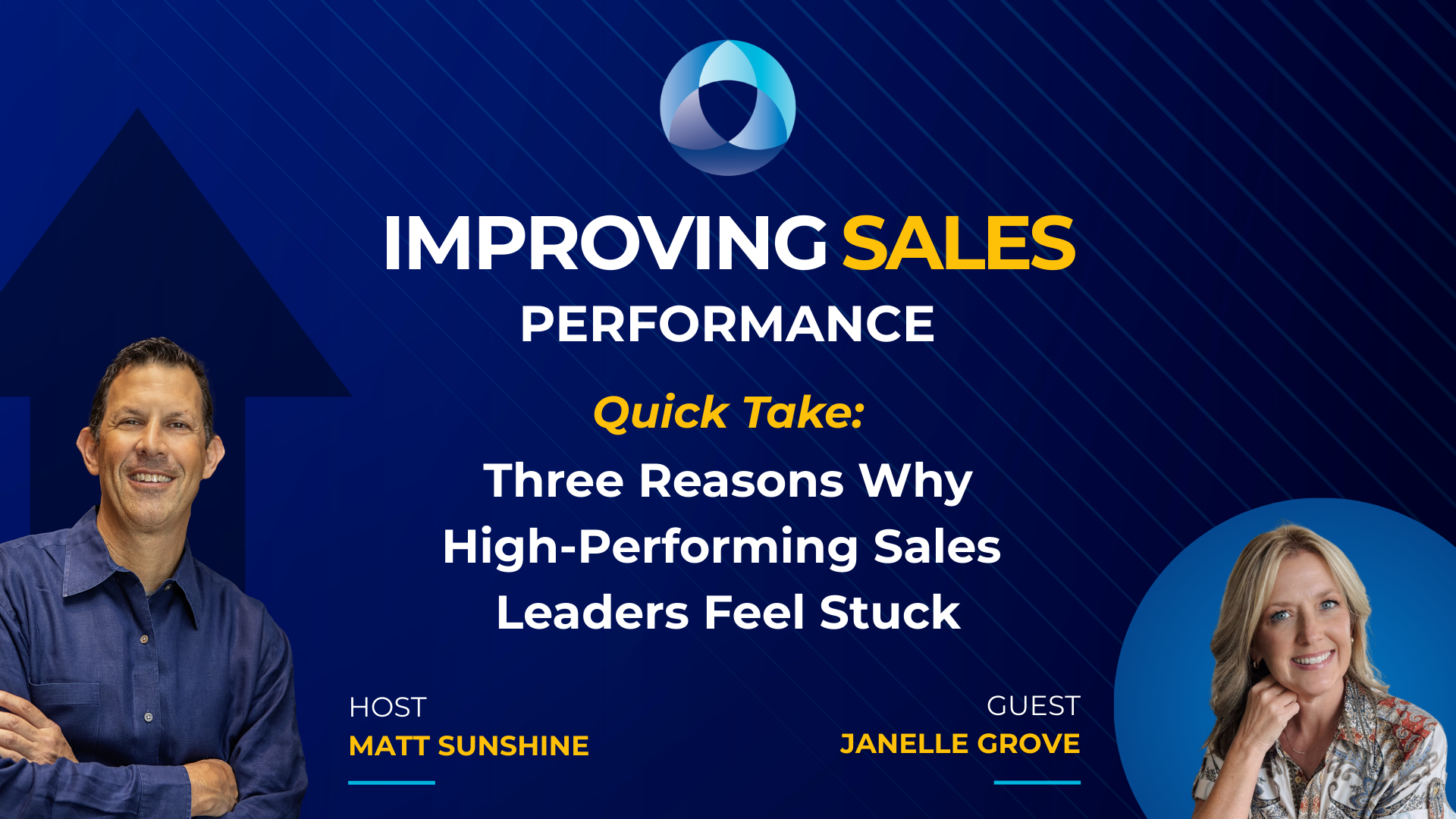
In this Quick Take episode of Improving Sales Performance, host Matt Sunshine hands things over to Janelle Grove, VP Managing Director of the Growth Collective at the Center for Sales Strategy, for a candid take on what's really going on when high performers lose momentum.
The short answer:
Feeling stuck isn't a failure. And the fix isn't trying harder; it's changing the environment around how decisions get made.
First, Let’s Redefine “Stuck”
When leaders say they feel stuck, they usually don't mean nothing is happening. In fact, on the surface, things often look fine. What stuck actually looks like for high performers is more subtle:
- Steady performance, but no real momentum
- Busy calendars with few meaningful decisions
- Small, incremental improvements instead of real breakthroughs
As Janelle puts it: "There's a lot of motion but not much movement."
This is where leaders confuse activity with progress. Busy can feel productive. Familiar can feel safe. But neither guarantees forward motion. And for high performers especially, the conditions that made them successful can quietly become the conditions that keep them from breaking through to the next level.
Why High Performers Are Especially Vulnerable
There's a counterintuitive truth at the heart of this conversation: the better a leader gets, the harder it becomes to be fully honest about what isn't working.
As leaders become more experienced and more respected, the margin for visible mistakes shrinks. Optics matter more. Confidence has to be managed. Admitting uncertainty feels riskier. So the conversations that would actually help (the honest ones, the messy ones) happen less and less.
High performers aren't stuck because they lack skill, effort, or ambition. They're stuck because their success has made it harder to access the kind of candid challenge and accountability that drives the next breakthrough.
3 Reasons Strong Leaders Lost Momentum
1. Isolation at the Top
As leaders advance, peer circles naturally shrink. Internal conversations become more filtered. Leaders start protecting confidence, managing optics, and avoiding uncertainty in front of people who might interpret it as doubt.
The result: decisions stop getting pressure-tested in real time and get carried internally instead. That isolation quietly slows execution (not dramatically, but steadily) in a way that's hard to diagnose because it doesn't look like a problem from the outside.
2. Too Many Inputs, Too Little Challenge
High performers are voracious learners. Podcasts, books, frameworks, conferences, etc. They consume it all. But as Janelle points out, insight without challenge rarely changes behavior.
"Leaders don't need more ideas. They need friction. Someone to push their thinking, test assumptions, and challenge the comfort of knowing."
Growth requires challenge and accountability, not just more information. And for most senior leaders, genuine challenge is increasingly hard to come by.
3. Decision Fatigue Disguised as Strategy
At senior levels, decisions are heavier. The stakes are higher. The context is more complex. And when decisions feel that weighty, delaying them can feel like diligence, like you're just being appropriately careful.
But here's the hard truth Janelle doesn't shy away from: indecision drains momentum faster than bad decisions do. What looks like strategic patience is often just deferred execution, and the team feels every bit of it.
The Shift: From Insight to Execution
Momentum returns, Janelle argues, when three things happen:
- Decisions are made in community, not in isolation
- Priorities are clarified out loud
- Commitments are stated and then revisited
Execution improves when leadership stops being a solo sport. It's not about trying harder or learning more. It's about changing the environment around how you lead and decide.
High Performers Don’t Need Fixing. They Need the Right Room.
If you're a high-performing leader who feels stuck, Janelle's message is direct: this isn't a signal to try harder. It's a sign to change the environment around your decision-making.
The right room (a well-curated peer group) creates the challenge, clarity, and accountability that's otherwise missing at the top. It's a place to pressure-test decisions in real time, to be fully honest without worrying about optics, and to move from knowing to doing with people who understand the weight of the decisions you're carrying.
That's exactly what the Growth Collective was built for: helping leaders stop leading in isolation, sharpen strategy, and turn insight into action.
FAQs
Why do high-performing sales leaders feel stuck?
High performers often create their own conditions for feeling stuck. As they advance, peer circles shrink, internal conversations become more filtered, and the margin for visible mistakes shrinks. The result is isolation — and isolation quietly slows execution, even for the most capable leaders.
What does "stuck" actually look like for a senior sales leader?
It rarely looks like failure from the outside. It looks like steady performance without real momentum, packed calendars with few meaningful decisions, and incremental improvements where breakthroughs should be. There's motion, but not much movement.
How does indecision affect sales leadership performance?
Significantly (and often invisibly). What looks like strategic patience is frequently deferred execution. Indecision drains team momentum faster than bad decisions do, because teams feel the hesitation and fill the silence with their own interpretations.
What is the Growth Collective?
The Growth Collective is a peer group program from the Center for Sales Strategy designed to help senior leaders stop leading in isolation. It provides a curated environment for challenge, clarity, and accountability so leaders can move from insight to action and see real, measurable results.
It’s Not Your Ability. It’s Your Environment
Feeling stuck isn't a reflection of your ability; it's a reflection of your environment. And environments can be changed. If you're ready to stop leading in isolation and start making decisions with the right people around you, learn more about The Growth Collective.


.png?width=2000&height=307&name=CSS_website%20footer_awards_2%20(1).png "CSS_website footer_awards_2 (1)")