
You know what to do. So why isn't it happening?
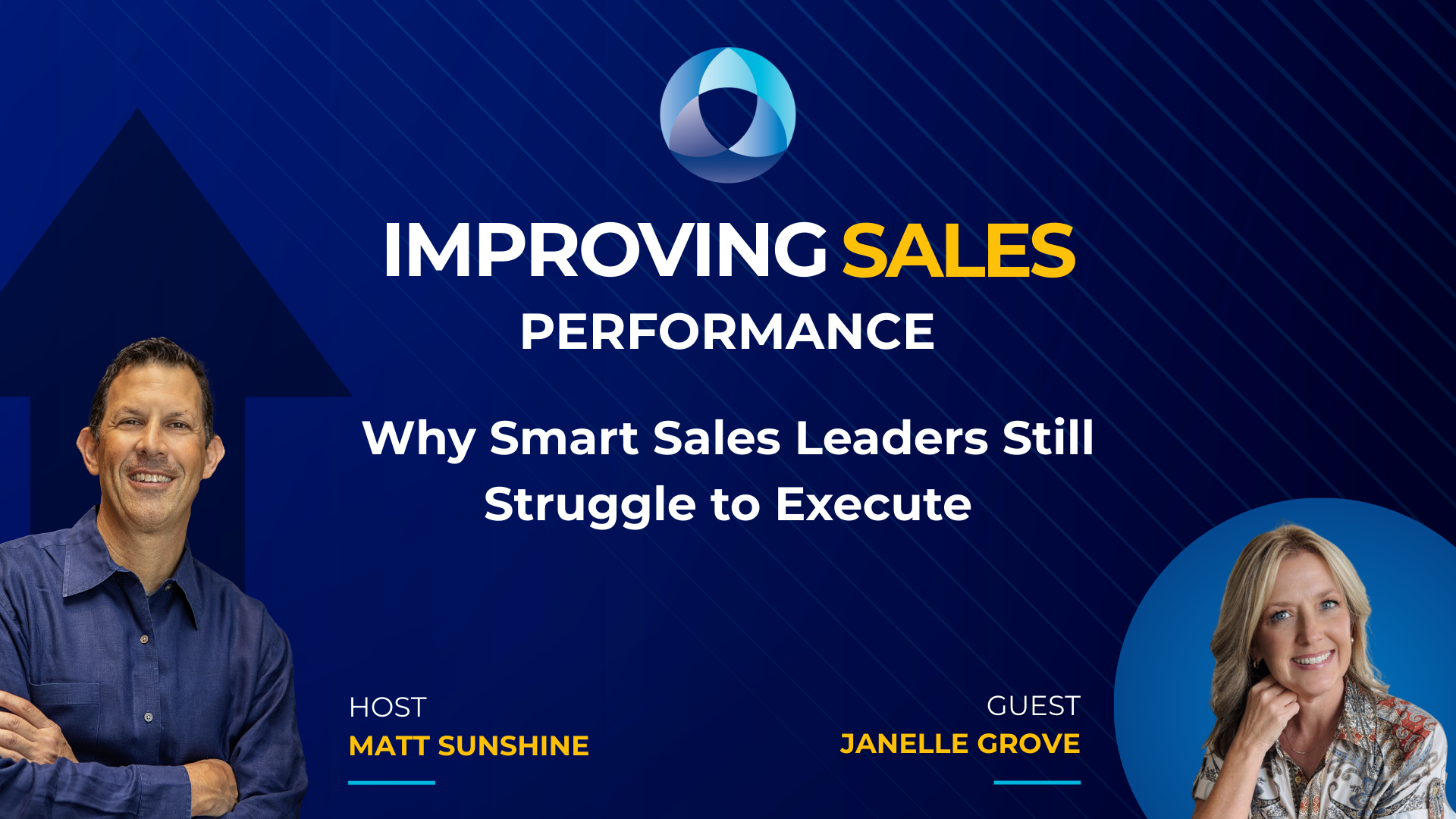
In this episode of Improving Sales Performance, Matt chats with Janelle Grove, VP/Managing Director of The Growth Collective, to dig into the real reason execution stalls for even the most experienced sales leaders (and what it actually takes to break through).
The short answer:
It's not a strategy problem. It's an execution problem. And more specifically, it's an isolation problem.
The Real Reason Execution Breaks Down
Most sales leaders Janelle works with already know what good looks like. They have data. They've invested in tools. They're aligned on goals. But when results fall short, the instinct is to question the strategy, when in reality, the strategy is usually fine.
The breakdown happens after strategy is set.
"Leadership decisions aren't made in a vacuum," Janelle explains. "They're made under pressure: revenue pressure, people pressure, culture pressure. When leaders are carrying all of that alone, even a sound strategy can stall."
The issue isn't a lack of knowledge. It's a lack of a clear place to process uncertainty and trade-offs in real time.
Knowing vs. Deciding: Why the Gap Exists
There's a meaningful difference between knowing the right move and actually making it.
As Janelle puts it: "Knowing what to do is intellectual. Deciding is emotional."
Once you decide, you're accountable. You're exposed. You can't undecide. And that's where even experienced leaders hesitate, filling the space between insight and action with overanalysis, second-guessing, and waiting on one more data point.
The higher the stakes (your people, your credibility, the revenue number), the wider that gap tends to grow.
Isolation: The Most Underestimated Execution Killer
Senior leaders face a unique challenge: they can't vent downward. Their internal peers may be competitors. Their teams need them to appear steady. So they think alone.
"Thinking alone amplifies doubt," Janelle says. Without a trusted peer group who understands the pressures of your role, even small decisions feel bigger than they are, and that slows everything down.
High performers don't fail because they lack answers. They stall because they lack a safe place to pressure-test decisions in real time.
The Hidden Cost of Indecision on Revenue
Indecision rarely shows up on a dashboard. But it absolutely shows up in results.
When leaders hesitate, teams feel it. Priorities blur. Coaching conversations soften. Accountability weakens.
Revenue stalls don't typically come from one catastrophic mistake; they come from the slow accumulation of delayed performance conversations, postponed structural shifts, and hesitation to reallocate resources or make necessary pivots.
The insidious part? Indecision doesn't feel like indecision. It feels measured. Cautious. Thoughtful. But to the team waiting for direction, it reads as confusion, and that energy drain compounds quietly over time.
As Matt puts it: "Not making a decision is effectively making a decision."
Why Information Alone Doesn't Drive Change
Sales leaders consume a lot of content. Books. Podcasts. Conferences. All of it is valuable. But as both Matt and Janelle agree... it rarely moves the needle on its own.
"Information doesn't create behavior change," Janelle explains. "Commitment and accountability do. Without a structure for action (peer challenge, reflection, and accountability), all of that insight stays theoretical."
The problem with a conference or a podcast is that it's an event. Euphoria lasts a couple of weeks. Then life happens, and nothing changes because there's no one holding you accountable, no partner comparing notes, and no ongoing commitment to act.
What Peer Challenge Actually Looks Like
There's an important distinction between advice, coaching, and peer challenge:
- Advice tells you what someone else would do.
- Coaching helps you discover what you already know.
- Peer challenge sits between those two, confronting your assumptions, testing your logic, and forcing clarity without hierarchy.
When you're in a room of peers who understand the role, the pressure, and the consequences you face, decisions accelerate and execution follows.
The questions that unlock momentum aren't ones you'd hear from a coach or manager. They come from people who've been in the same seat:
- What are you avoiding?
- What would you do if fear wasn't a factor?
- What's the real constraint here?
- What's the cost of waiting?
The Power of Experience Sharing
Matt shares something telling from his own experience in a peer group: what he values most isn't being told what to do. It's hearing how others have navigated similar situations in their own organizations.
"All of a sudden, it's not people sitting around going, 'You should do this.' It's people sharing, 'This is how I handled it' or 'Here's something we experienced in my company.' I just think that is so powerful."
And if you have the opportunity to connect and share with peers from different industries? That makes experience sharing all the more rewarding. The dynamics are similar enough to be relevant (managing underperformers, making tough pivots, reallocating resources) but different enough that there's no competitive risk in being candid.
The First Shift for a Leader Who Feels Stuck
If you're doing all the right things but execution still isn't happening, Janelle's advice is straightforward: stop thinking alone and start talking out loud.
"Stop asking what you should learn next. Start asking what decision you're avoiding and what action you need to take today."
Execution momentum doesn't start with another program or credential. It starts with naming the hard choice, saying it out loud, and letting other people challenge it. Once that happens, the momentum returns.
Frequently Asked Questions
Why do sales leaders struggle with execution even when they know what to do?
Knowing what to do is an intellectual exercise. Deciding to act is an emotional one. Once you commit, you're accountable and exposed. Under revenue and people pressure, even experienced leaders delay action, filling the gap with overanalysis rather than forward movement.
How does isolation affect sales leadership performance?
Senior leaders can't show uncertainty downward, can't vent to their boss without risking perception, and may view internal peers as competitors. This forces them to process complex decisions alone... and thinking alone amplifies doubt, slows decision-making, and stalls revenue momentum.
What is the difference between peer challenge and traditional coaching?
Coaching helps you discover what you already know. Peer challenge actively confronts your assumptions and forces clarity among people who understand the same pressures you face (without a power dynamic or hierarchy in the room).
Why doesn't reading books or attending conferences change execution habits?
Learning events create short-lived insight and enthusiasm. Without accountability structures (someone holding you to commitments, peers comparing notes, and ongoing reflection), the insight stays theoretical and fades within weeks.
What does a sales leadership peer group actually do?
A peer group brings together leaders with similar responsibilities but from different industries. Facilitated conversations allow members to share real challenges, hear how others have navigated similar situations, and hold each other accountable to action in a space where candor is safe and hierarchy doesn't exist.
Want to explore what peer challenge could look like for you or your sales team?
Connect with Janelle on LinkedIn or check out The Growth Collective to see how a curated peer group can help empower high-performing sales leaders to accelerate growth, sharpen strategy, and lead with impact.


.png?width=2000&height=307&name=CSS_website%20footer_awards_2%20(1).png "CSS_website footer_awards_2 (1)")