
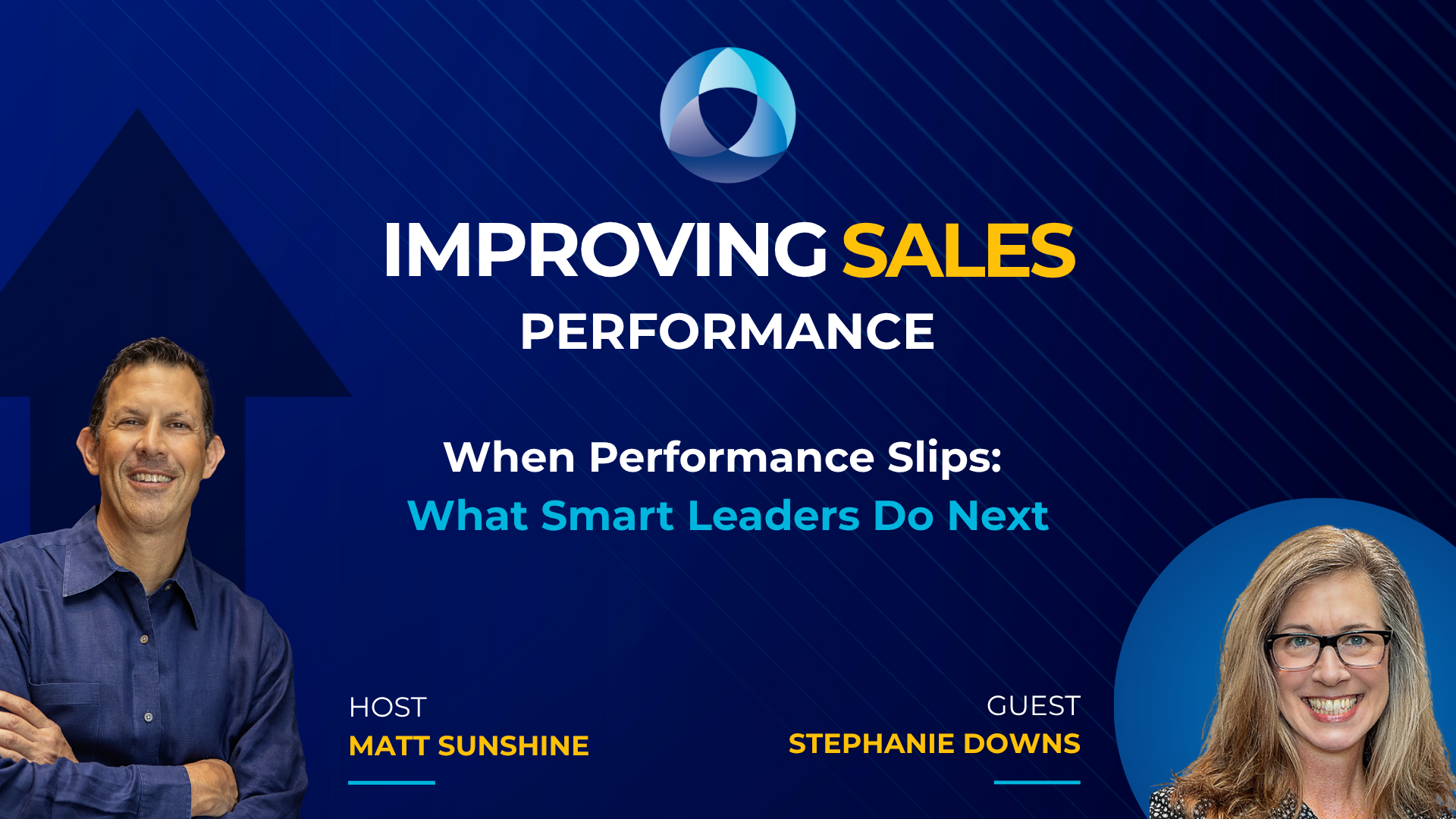
In this episode, we’re talking about what really causes sales performance to decline and what leaders can do to help their reps bounce back with clarity and confidence.
Stephanie Downs, SVP/Senior Consultant at The Center for Sales Strategy, joins Matt to help break it all down. She expands on key ideas from her article in the 2025 Talent Magazine, where she shares a framework for diagnosing underperformance and reigniting momentum through strength-based leadership.
Stephanie delivers powerful takeaways, such as:
- Why, too often, feedback from sales managers is too vague
- How to distinguish between a skills gap and a motivation issue
- And, finally, why you should focus on a rep’s strengths (even when results seem to be lagging)
Vague Feedback Is a Silent Killer
Stephanie and Matt agree: most feedback from sales managers is either too vague or too infrequent. Whether it’s praise or constructive criticism, reps need specific, actionable input, not generalities like “run faster” or “do more.” Effective coaching includes pointing out what is working, not just what needs to improve.
Know the Difference: Skills Gap vs. Motivation Problem
One of the biggest challenges leaders face is determining why someone is underperforming. Is it a lack of skills or a lack of effort? Stephanie emphasizes the importance of diagnosing the root cause.
Leaders must assess:
-
Whether expectations have been clearly communicated
-
If proper training and resources are in place
-
Whether accountability is consistent
-
If non-performance is being tolerated
Simply telling someone to “increase activity” isn’t the same as setting clear, measurable expectations, and that disconnect can hurt performance.
Strength-Based Coaching Isn’t Soft. It’s Smart.
Stephanie makes a compelling case for focusing on a rep’s strengths even when they’re not hitting their numbers. Backed by Talent-Focused Management principles, she explains that leaning into someone’s natural talents can generate significantly greater results than trying to “fix” their weaknesses.
However, that doesn't mean leaders should lower the bar. The key is combining strength-based coaching with clear expectations and consistent accountability.
Don’t Wait to Act: Move Faster Than the PIP
Too often, the Performance Improvement Plan (PIP) is seen as a last resort, or worse, a precursor to termination. Stephanie challenges that mindset. Instead of waiting six months (or a year!) to address poor performance formally, she recommends acting earlier.
For example: If a rep is expected to set two new business appointments each week and they miss that goal two weeks in a row, a conversation should happen immediately... not months later.
Better yet, Matt suggests reframing the PIP entirely. What if every rep had a quarterly Performance Plan or Success Plan, regardless of how they’re doing? Tied to review/preview meetings, these collaborative conversations could normalize performance planning and remove the punitive stigma of traditional PIPs.
Coaching High-Potential Reps Takes Extra Effort
If a rep has clear potential but is still underperforming, leaders should go all-in. Stephanie’s coaching advice includes:
-
Diagnosing the true barriers to success
-
Focusing on 1–2 high-impact areas to improve
-
Riding along on calls and reviewing proposals together
-
Practicing sales scenarios and coaching through each stage
Replacing a rep is expensive. If they’re coachable and capable, they’re worth the effort.
The One Conversation You Should Have This Week
To wrap up the episode, Matt asks Stephanie what one conversation a leader should have this week with an underperforming rep. Her answer is simple, yet powerful:
-
Lead with empathy
-
Use data to ground the conversation
-
Be clear about what’s expected
-
Ask for the rep’s own assessment
-
Offer tangible support and resources
And, most importantly, don’t assume they know they’re underperforming. You owe it to them to make that clear and help them course correct.

.png?width=2000&height=307&name=CSS_website%20footer_awards_2%20(1).png "CSS_website footer_awards_2 (1)")