
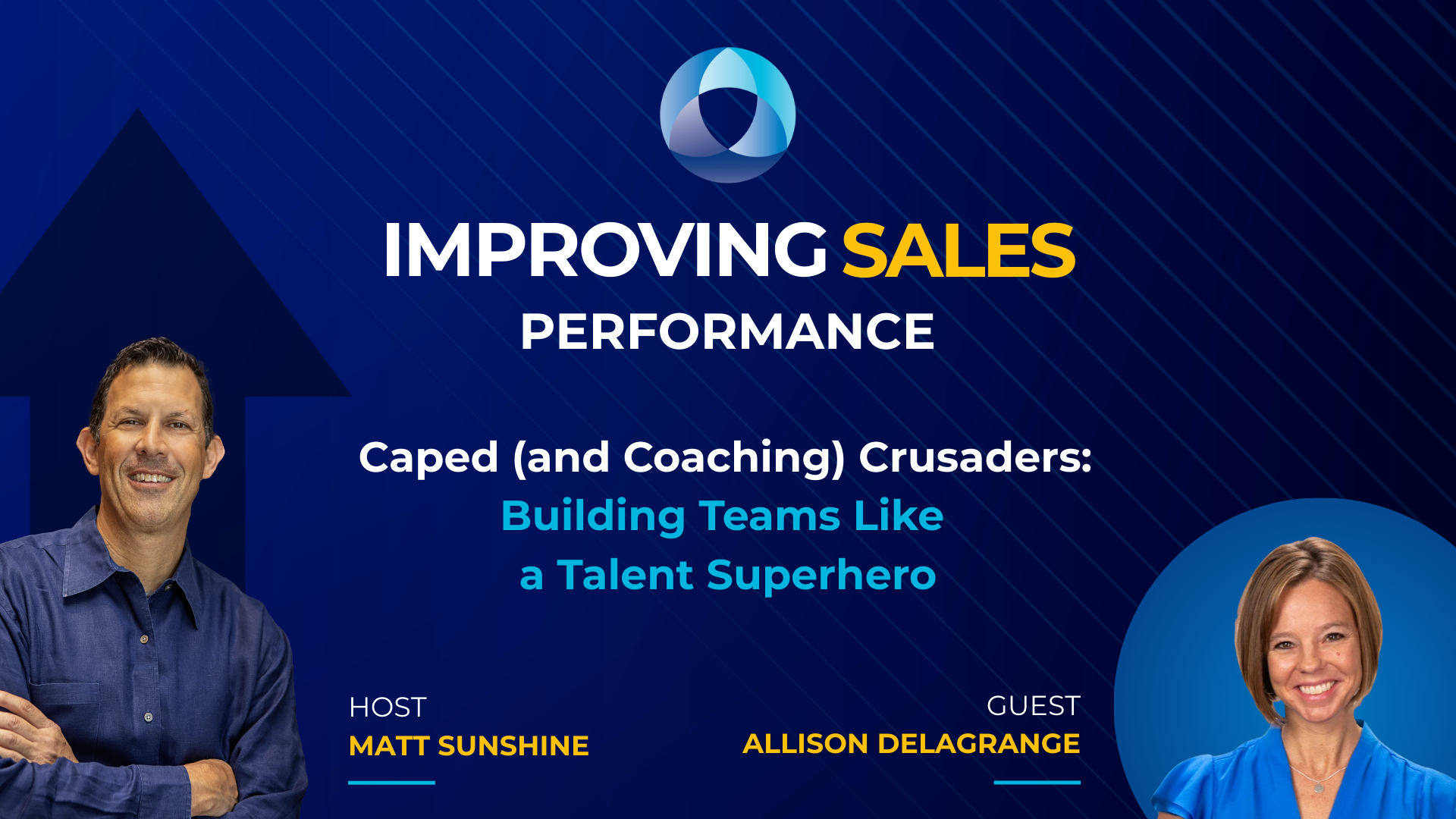
In this episode, we’re shining a spotlight on what it means to lead like a Talent Superhero and how prioritizing people fuels consistent performance.
Joining Matt is Allison Delagrange, a 2X Talent Superhero and Senior Consultant at The Center for Sales Strategy.
Allison shares incredible insights, including:
- How to be a collaborative leader, not a condescending one (Hint, hint: Instead of criticizing weaknesses, empower through strengths)
- How it pays to communicate with your existing team exactly WHY you are recruiting
- And, finally, how recruiting raw talent means hiring for impact: both in what they’ll bring to the team AND how you’ll help them grow
The Talent Superhero Mindset
Allison opens by demystifying the “superhero” title: there’s no magic involved. Rather, it’s about having the right tools and philosophy.
Talent-focused managers share a core belief:
“People have strengths and non-strengths, and that doesn’t change. The job of a leader is to unlock their natural talent.”
This mindset shapes everything, from recruitment strategies to coaching methods. According to Allison, great leaders:
-
Hire for impact, not just to fill seats — they focus on finding people who serve a specific purpose within the organization.
-
Think long-term, not short-term — they’re proactive about building future-ready teams instead of reacting to immediate problems.
-
Stay collaborative, not condescending — coaching focuses on maximizing strengths rather than harping on weaknesses.
Balancing Recruitment and Leadership
Managing a team while proactively recruiting can feel like a juggling act, but Allison believes it’s a non-negotiable for talent-focused leaders. Her advice:
-
Communicate with your current team
Transparency is key. When recruiting, explain why you’re doing it:“I want to surround you with top-notch teammates. We're not replacing. We're upgrading.”
-
Schedule dedicated recruitment time
Just like sales prospecting, recruitment requires consistent effort. Block time on your calendar to source, connect with, and evaluate candidates (and don’t cancel it).
This approach ensures leaders support their existing teams while continuously building a pipeline of talent.
The Power of a Talent Bank
Allison emphasizes the importance of maintaining a “talent bank,” a bench of potential star players you can call when positions open unexpectedly. Without one, leaders often scramble and make hasty hires they later regret.
Tips for building and maintaining a talent bank:
-
Actively ask for referrals and attend networking events or job fairs.
-
Track candidate interactions in a simple spreadsheet or CRM.
-
Stay connected on platforms like LinkedIn by liking, commenting, and celebrating candidates’ wins.
-
If you find a truly exceptional candidate, consider creating a role for them rather than risking losing them.
Allison likens it to maintaining a long-distance friendship: small, ongoing touches make it easier to pick up the phone when an opportunity arises.
Coaching Through a Strengths Lens
One of the biggest differentiators of a talent-focused leader is how they coach. Allison contrasts strengths-based coaching with the traditional “fix-it” approach:
-
Fix-it coaching focuses on shortcomings, which can leave employees feeling frustrated or undervalued.
-
Strengths-based coaching leverages how individuals are wired to unlock their full potential.
For example, not every salesperson is naturally competitive. While contests and leaderboards may motivate some, others thrive as achievers — people driven by surpassing their own personal best rather than beating others. Understanding this distinction allows leaders to set personalized goals and celebrate progress in ways that truly resonate.
Hiring Right When a Role Opens Unexpectedly
When roles suddenly open (whether due to promotions, relocations, or company growth) Allison warns against rushing into a hire:
-
Pause and take inventory: Assess the team’s existing talent before making decisions.
-
Use the Job Spec & Analysis Tool: Outline the must-have talents, skills, and experience on one side and “nice-to-haves” on the other.
-
Don’t compromise on talent: While experience can be flexible, Allison stresses that hiring someone without the right natural strengths almost never works out long-term.
Like Allisons says, "you can train skills, but you can't change how someone is wired."
The 5:1 Feedback Ratio
Allison and Matt also discuss one of CSS’s cornerstone principles: the 5:1 ratio of positive to constructive feedback. Over time, leaders should aim to give five pieces of positive recognition for every one critique.
This doesn’t mean avoiding coaching conversations — it means recognizing wins often, no matter how small. Celebrating successes builds trust, strengthens relationships, and keeps employees engaged and motivated.
Taking Calculated Risks
Sometimes the perfect candidate doesn’t check every box. Allison recommends taking calculated risks based on natural talent:
-
Flexibility is possible on the “nice-to-have” side of the job spec — like years of industry experience.
-
Never compromise on core strengths. A lack of natural energy, work intensity, or drive is extremely difficult to overcome, even with training.
Short-term wins from the “wrong” hire can be misleading. If the goal is long-term impact, natural talent must come first.
One Small Habit That Transforms Leadership
For leaders wanting to become more talent-focused, Allison offers one powerful starting point: intentional feedback.
Take time daily to notice and acknowledge someone’s strengths:
-
The problem-solver who always finds multiple solutions
-
The hardest worker who sets the tone for the team
-
The teammate whose positivity uplifts everyone
“When you call out someone’s talent, you’re not just boosting performance — you’re helping them realize their potential.”
This consistent recognition compounds over time, creating a stronger, more engaged team.

.png?width=2000&height=307&name=CSS_website%20footer_awards_2%20(1).png "CSS_website footer_awards_2 (1)")