
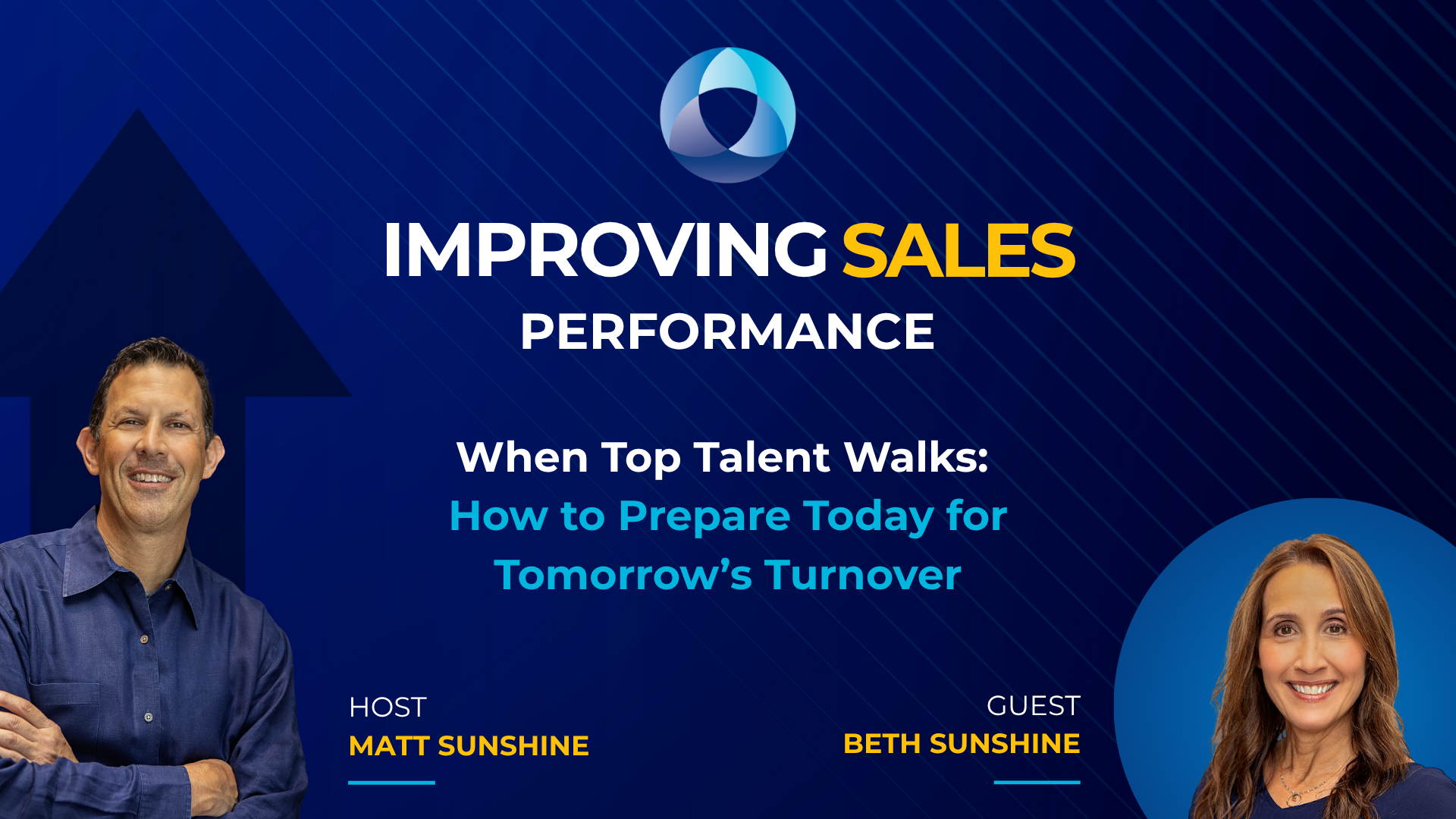
In this episode, we’re exploring what smart sales leaders do before their top performers resign.
And joining Matt is Beth Sunshine, SVP/Talent Services at The Center for Sales Strategy.
Her contribution to the 2025 Talent Magazine highlights the importance of being ready long before turnover happens. And, here, she shares actionable ways to build that readiness into your talent strategy.
Beth brings so much wisdom to the table, including:
- Why it’s essential to protect the relationships with your people who leave, because “boomerang” employees are all too common
- How, when it comes to referrals, vague requests get vague results
- And, finally, why the only thing more expensive than making the wrong hire, is waiting too long to make the right one
Step One: What to Do Immediately After a Resignation
Beth outlines a four-step plan for leaders to follow in the critical hours and days after a top performer resigns:
-
Protect the Relationship: Always ensure the employee leaves on good terms. With "boomerang employees" (those who return after leaving) becoming more common, this matters more than ever.
-
Shift into Learning Mode: Don’t settle for “they got more money.” Dig deeper to understand what really motivated their departure.
-
Stabilize the Team: Be visible. Check in with your remaining team members and help calm any uncertainty.
-
Tap Into Your Talent Bank: If you’ve been building a pool of potential hires, now’s the time to revisit those relationships.
Keep Your Talent Bank Warm
Beth stresses that smart leaders recruit year-round, not just when they have an opening. She compares it to a professional sports team: the players on the court matter, but so do the strong contenders on the bench.
To build and maintain a robust talent bank:
-
Ask for referrals (but be specific).
-
Reach out to passive candidates on LinkedIn.
-
Engage with prospects over time by sharing relevant articles, offering encouragement, and asking for their input.
A warm talent bank means you’re never starting from scratch. It’s your safety net AND your competitive advantage.
Spot Disengagement Before It Leads to Turnover
Beth points out that the warning signs of disengagement are often subtle:
-
Less participation in meetings
-
Withdrawing socially
-
Showing less enthusiasm for coaching
-
Adopting a “checklist” mentality
She recommends taking a proactive approach. Tools like the Growth Guide help leaders ask intentional questions like:
-
What’s the best challenge I could give you right now?
-
How do you prefer to receive feedback?
-
How do you like to be recognized for a win?
These conversations create stronger relationships and help prevent disengagement before it starts.
Want Better Referrals? Be More Specific.
Generic requests for referrals (“Do you know anyone for this role?”) rarely get the results you need.
Beth suggests being crystal clear about the traits you’re looking for, think: Who do you know who builds trust quickly and thrives in high-energy environments?
Just like recommending a restaurant, the more details you provide, the better the referral will match your needs.
Culture and Turnover Preparedness Go Hand in Hand
Strong company culture reduces turnover. But even in the best environments, it still happens.
That’s why culture and turnover preparedness must be linked. When you’ve got a strong talent bank and a clear definition of excellence, you don’t scramble, you strategically respond. That mindset also empowers you to hold higher standards for performance and fit.
Avoid the Panic Hire
After a resignation, there’s pressure to fill the role quickly, but Beth warns against rushing.
“The only thing more expensive than making the wrong hire is waiting too long to make the right one.”
Her advice?
-
Know what excellence looks like in the role.
-
Use validated assessments to cut through polished resumes and interviews.
-
If your talent bank doesn’t have the right fit, wait. The short delay is worth it in the long run.
A 3-Step Action Plan to Start This Week
Beth leaves listeners with a practical exercise any manager can do today:
-
Spend 3 minutes writing down what excellence looks like in a role you may need to fill someday.
-
Make a list of 5 trusted contacts and send them a targeted referral request based on those qualities.
-
Start building relationships with the referrals you receive—no hiring required yet.
This simple practice gets you one step closer to being prepared before you need to be.

.png?width=2000&height=307&name=CSS_website%20footer_awards_2%20(1).png "CSS_website footer_awards_2 (1)")