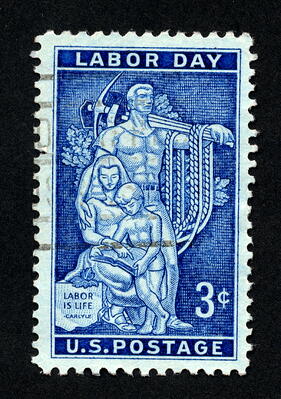

Today is Labor Day, the unofficial "end" of summer. We hope you're relaxing with your family today, and spending some time outside, before the weather starts to turn.
by Kathleen O. Celmins, on September 1, 2014
Today is Labor Day, the unofficial "end" of summer. We hope you're relaxing with your family today, and spending some time outside, before the weather starts to turn.
by Kathleen O. Celmins, on August 29, 2014
This week, we talked about talent trumping desire, how to increase referrals, how winning is everything, and what's changed (and what hasn't!) in sales this century.
The Center for Sales Strategy Weekly Wrap-Up
by Steve Marx, on August 28, 2014
Approaching new prospects with a customer-needs focus used to be the smartest thing you could do. No longer.
Today it’s the only thing you can do, the only way to win an appointment with a decision influencer.
Rewind back to the 1990s. It was that recently that prospects needed to meet with a salesperson to learn about the products and services that company was offering. Yes, there were brochures, and sometimes a company would make a brochure available by mail to prospects, but to get questions answered and to learn about specific applications, buyers knew they needed salespeople.
Today, that notion is downright quaint. Product information, answers to most questions, insights into specific applications via case studies, and user reviews/raves/rants are all found online. Prospects learn almost everything they need to know faster, and with more accuracy and reliability, on the web than they do from salespeople.
They can make a buying decision quicker, easier, and with less annoyance without a salesperson than with one!
As a result, it’s pretty rare these days that a salesperson can get an audience with a buyer to talk about what he or she is selling. What used to be the path to a weak deal at a dirtball price—talking about what you’re selling—is now even worse: It just gets your email, your voicemail, and you deleted.
by Dana Bojcic, on August 26, 2014
Several years ago I decided to take up tennis. I have always considered tennis to be the sport with the cutest outfits and I was excited to learn! The tennis courts in the neighborhood my husband and I had just moved into were beautiful and we thought tennis would be something fun we could do together.
We approached the sport with a sense of enthusiasm and excellent intentions. We invested in some equipment; scheduled time to practice together and even signed up to play on a few beginner teams. I thought it would be perfect: We get to spend time together, we get exercise, we get to hang with friends… it was an excellent plan!
There was only one problem: My lack of tennis talent. And it proved to be a big problem.
Neither of us had ever played in a league, yet we noticed a huge difference immediately. Denis had a talent for tennis. I did not.
Everyone has talent—for something. Every single person in the world has a short list of things they are really good at. These are our talents and they define who we are, what we do, how we work, where we succeed, and why we’re valuable.
Just as all of us have a short list of talents, we also have a long list of non-talents. Whenever possible, we should avoid doing things that require talents we don’t have, and other people would be wise to avoid asking us to do them as well. When it came to tennis, I was asking myself to use a talent I didn’t have.
The key point here is that people do not succeed based on their weaknesses. That may seem obvious, but it’s important to reiterate: We will never progress or get ahead by leaning on our weaknesses—or by trying to fix our weaknesses.
by Kathleen O. Celmins, on August 22, 2014
This week, we wrote about nonprofits, and how they're not so different from us. We focused on individual focus meetings, discussed where vs. what, and we broke inbound marketing into pieces that even a five-year-old could understand.
The Center for Sales Strategy Weekly Wrap-Up

by Dana Bojcic, on August 21, 2014
Have you ever gone to the grocery store hungry and without a shopping list?
Do you make strategic and wise choices or do you bounce around from aisle to aisle frantically looking for “something to eat” and realize later that you picked up some things you didn’t really need?
by LeadG2, on August 20, 2014
I think Albert Einstein was onto something with that statement.
If you’ve ever found yourself trying to explain something technical or complex to someone who isn’t familiar with the topic, you know what I mean. Perhaps you work in finance or real estate and are all too familiar with the puzzled looks from your clients when you try to explain mortgages, stocks, or investments. (This is where all those “______ for Dummies” books come in handy, right?)
As an inbound marketing consultant, I get the confused look pretty often. It’s easy for me to assume everyone knows what inbound is. After all it’s a big “buzzword” in the digital marketing world. But the reality is it’s still a relatively new topic and those in other industries don’t always understand. Sure, maybe they’ve heard the term, but they don’t really have a good grasp of what it is or what it looks like. In fact, I have friends in sales, management, and even some working in traditional (outbound) marketing that are still giving me that quizzical look even after I provide them with the general definition—and these are people that should know. They’re the ones who can really benefit from it.
It’s at this point where I typically recall (and laugh about) the scene from The Office, where Steve Carrel’s character is trying to understand an explanation of their budget but doesn’t get it. After briefly pretending to understand, he finally asks his coworker to, “Explain it to me like I’m 5.” And, ever since then, I’ve found myself thinking this same thought when someone is trying to explain something complex or technical that I’m not familiar with, or when I need to explain something of similar nature to someone else.
The process of attracting the attention of prospects, through content, before they are even ready to buy; the best and most cost-effective way to convert strangers into customers and promoters of your business.
But, again, what does it really entail? What does it look like? Complexities and technical jargon aside, of
course.
by Matt Sunshine, on August 19, 2014
Salespeople and sales managers universally loathe the individual focus meeting. That's too bad, because it's a wonderful way to connect with your employees, act as a resource, and let them know you trust them and are interested in their success.
Everyone gets busy, that's for sure, but you shouldn't get too busy to sit down with your salespeople once a week for one-on-one time with each salesperson who reports to you.
Follow these three steps and make your individual focus meetings more effective and productive.
by Jim Hopes, on August 18, 2014
"It takes more than a good heart."These were words spoken to me by the Senior Pastor at my church when he was convincing me to take a major role in the upcoming capital campaign. He was right. You know yourself in today’s competitive fundraising environment that it takes more than a staff with a love for your cause to secure a major gift from an individual or a corporation. It takes talent to be a successful development officer.
Talent is different than skills. Skills can be learned. Talent is innate. So if you are facing a big increase in your fundraising budget this year or next, the most important thing you can do is employ fundraising professionals with the innate behaviors that will allow them to ask for and receive major gifts from a wide variety of donors.
But what talents, what innate behaviors, should you look for? Based on research with thousands of professionals whose role is to seek commitment, we suggest strongly that you look for these eight key talents:
Getting in front of key donors is hard work and uncovering their underlying needs and goals for giving requires effort as does fashioning a tailored solution. The best fundraising professionals love to work and go about their work in a very focused manner. They work hard, they work smart, and they work long.
The very best have standards for excellence and produce quality work. They can manage details easily and spin multiple plates, rarely dropping a single one.
They have a certain command about them that allows them to persuade and convince naturally. They are very comfortable with the notion that they must bring others around to their way of thinking.
They gather more information, they ask better questions, and they devise more creative solutions.
For these people, the glass is always half full, they deal with change well, and they have a wide circle of people who like them.
This genius-level empathy allows them to know how and when to proceed. Donors feel a real sense of being cared about—because they are.
Top people see themselves as significant, worthy of sitting with high-net-worth individuals and top corporate officers. They can make a “big ask” because it lines up with their self-image.
Top performers are constantly striving to best last year’s, last month’s, and even yesterday’s performance. They think in terms of winning, and when they are winning for your cause, everyone wins.
by Kathleen O. Celmins, on August 15, 2014
This week, we learned about how to know when leads are ready to be contacted, got inspired by leadership quotes, brushed up on in-field coaching, and were reminded that everyone in the company is involved in sales support and customer service.
The Center for Sales Strategy Weekly Wrap-Up

Improve your sales performance. Sales managers can gain unique perpsectives on hiring and developing more effective sales teams. Salespeople can improve their approach to getting more appointments with target prospects, uncovering desired business results, and engaging clients in a collaborative process that leads to the sale.
The Center for Sales Strategy
Contact Us