

<img height="1" width="1" style="display:none" src="https://www.facebook.com/tr?id=585972928235617&amp;ev=PageView&amp;noscript=1">

The Center for Sales Strategy Blog

Five Reasons I Might Not Know What I Am Talking About

Five_reasons_I_might_not_know_what_I_am_talking_about_If you read a lot of blogs and do some writing yourself, you are very familiar with headlines like “The two things a business owner should never do,” “Five reasons why Facebook is a bad investment,” or “Six steps to success.”

I use titles like those all the time. I do it for the same reasons others do it, to gain attention. Given the volume of information coming at all of us, we make split second decisions to engage or not.  A good title can make all the difference. Sometimes these intriguing titles are supported with great information. Those are my favorite blogs. Other times, these pithy titles turn out to the best part of the blog (like a great trailer for a bad movie). 

Topics: Inbound Marketing

Our Favorite Blog Posts of 2013

dreamstime_xs_34443044As we welcome the New Year, a few of us at The Center for Sales Strategy were discussing some of our favorite blog posts from 2013.

We thought a great way to capture this information was to survey several of the contributors to The Center for Sales Strategy blog and asked them to provide their top posts from our blog as well as their favorite post from other blogs.  It was a difficult decision as we blog 4 to 5 times per week and cover multiple categories: Digital, Inbound, Management, Sales and Talent.

We would like to share these results with you so that you can see what’s on our mind and what we think will be important heading into 2014.   

Happy New Year and thanks for reading The Center for Sales Strategy blog.

Topics: Digital Inbound Marketing Sales

Top Ten Blog Posts from The Center for Sales Strategy Blog

Top_Ten_Blog_Posts_of_2013As 2013 comes to a close and we reflect on the blog posts that we have posted throughout the year, it’s always enlightening to see which were the most read and shared. Since we blog regularly about digital, inbound, management, sales and talent there are a lot of blog posts that could make this top 10 list, but of course, only 10 could make our list of top viewed blog posts of 2013.
Topics: Digital Inbound Marketing Sales

Five Steps to Convert Your Inbound Marketing Leads into Customers

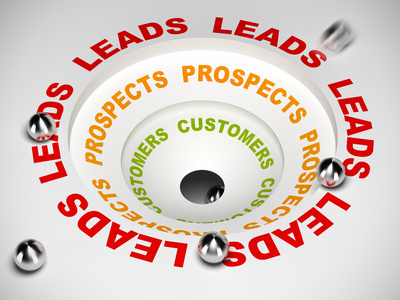
Youve_Got_Leads_Now_What_The_5_Steps_to_Convert_Your_Inbound_Leads_into_Customers-1Most inbound marketers think the hardest part about their lead generation plan is actually getting the leads to come in, and while this is no easy task, it’s equally important to strategize and prepare for the process of following up with your inbound leads. With these five steps you’ll be able to more effectively determine whether leads are worthy of sending to sales and ultimately increase your likelihood of converting leads into new customers.

Topics: Lead Generation Inbound Marketing

Inbound Marketing as Easy as 1, 2, 3

Inbound_Marketing_as_Easy_as_1_2_3Recently after writing a blog post about how inbound marketing isn't rocket science, a few clients asked me to boil down inbound marketing to its most simplistic nature.

So here it is… inbound marketing as easy as 1, 2, 3.

1. Create Content

The most common form of content creation that we are used to with B2B is blogging. So, the first step is to create a blog and start blogging. Yes, you need a plan and yes, you need to create content that's relevant to your persona... but don't hesitate to get started writing blog posts and doing it consistently 2 to 3 times per week, EVERY week! 

Topics: Inbound Marketing

It’s Not Rocket Science, It’s Inbound Marketing

Its_Not_Rocket_ScienceRecently while attending a meeting with a prospect and explaining the 7-Step Lead Generation process to them, and how they start to generate leads with inbound marketing, they made the comment that “inbound marketing is like understanding rocket science.” This comment stuck with me and made it more evident than ever that to some, inbound marketing is not as easy to grasp as some experts make it appear.

Why is Inbound Marketing Difficult to Some?
If you understand Search Engine Optimization (SEO), social media, email marketing, and website design and have a great team of writers on staff, and have someone that can dedicate 10 hours a week or more to publishing blog posts and creating landing pages for your premium content, it’s not really that challenging.  

What? You don’t have those skill sets within your company or the resources to dedicate to inbound marketing?  It’s okay… for those companies that don’t have this expertise but are still interested in generating leads through inbound marketing there are plenty of ways to make the process easier and doable even for the smallest of companies.

How to Make Inbound Marketing Effortless
Well, you can’t really make it effortless but you can do a few things to help supplement the resources you have available. Here are 3 steps to make inbound marketing easier: 

Topics: Inbound Marketing

8.5 Content Ideas That Will Help You Attract New Prospects

8.5_Content_Ideas_That_Will_Help_You_Attract_New_ProspectsIf you’re in the position of needing to attract new and better prospects to your business, then I want to let you in on a little secret. While you may have your sales team busy cold calling or your marketing team putting together outbound marketing initiatives – both which can be extremely useful and effective when done correctly– there is still a world of B2B decision makers that are not hearing, seeing, or noticing your message. 

So, where are they? They’re in the same place you are right this very second. They’re online… searching for information, seeking solutions to their problems, and researching options for their business. The question then is, are they finding you when they search online? Or are they finding your competitor? Does your company website have valuable content that represents your areas of expertise while delivering a thought-provoking and resource-rich experience? Or is it just an online brochure of the services you offer? 

While original, keyword-rich, and relevant content written for your best prospects is what every B2B company needs in order to compete in the online world of search and social media, it’s not always easy to come up with that all-important content on a regular basis. So, here is list of 8.5 content creation ideas that you can start working on today:

Topics: Inbound Marketing

Writing for Humans AND Using Keywords? It Can Be Done – Here’s How!

Writing_for_Humans_AND_Using_Keywords_It_Can_Be_DoneWhen you think of SEO (search engine optimization) do you think of keyword stuffing, poorly written content, or irrelevant links? If you do, then you’re not alone, and that’s because many people out there have tried (and failed) at trying to trick the search engines into giving them credit in search rankings that they don’t necessarily deserve. And if there’s anything search engines have taught us with their constant upgrades and revised algorithms, it’s that they don’t like being tricked, and for good reason. 
Search engines such as Google want to deliver the best, most useful content to their users. They want to answer our questions quickly and efficiently, and they have a variety of ways they determine exactly how to do that. I won’t get into those details today, but I do want to share with you how, when used correctly, keywords can help you not only get found in search engines but even more importantly… help you create content that humans (and specifically your target persona) want to read, and ideally share with their friends and colleagues. 

If your marketing plan includes a content strategy focused on publishing useful, informative, shareable content (which it should!) then unethical SEO practices simply go against everything you’re striving for. However, this doesn’t mean SEO should be viewed as a dirty word.

Topics: Inbound Marketing

Five Characteristics of an Inbound Marketing Culture

Building_an_Inbound_Marketing_Culture_at_Your_CompanyThe best inbound marketing programs and the ones that create the most leads are not necessarily the ones that develop the most content or have the prettiest infographics.  The most successful inbound marketing programs are the ones that embrace inbound marketing throughout the organization, and understand that in order to succeed it will take more than just the efforts of one person.  An inbound culture differs from an outbound culture in that the expectation within an inbound culture is that the company’s website and blog will be sought out and found by our prospects, because of the great content that’s created rather than having to utilize outbound methods to attract prospects to their website.  

In a very basic sense, an inbound culture understands that the very core of their existence is based upon trying to solve their prospect’s needs and explaining to them in a non-sales oriented way how they can do that for them.  

There are several characteristics that successful inbound marketing organizations share and we have listed our top 5 below.

Topics: Inbound Marketing

Outbound Marketing + Inbound Marketing = Simply Genius!

Outbound_Marketing_Inbound_Marketing_GeniusFor several years The Center for Sales Strategy has been saying that the combination of outbound marketing plus inbound marketing is the exact sweet spot where marketers can earn the greatest results. This is a reality because it's how the consumer wants it, and when it comes to achieving results that's what matters most. 

It happens all the time when you hear or see a commercial message; it sparks an interest or a thought or an idea and while you might not be ready to be a customer at that exact moment, you are interested enough to want a little more information. So what do you do?  Nowadays most people take out their phone and google it! Or if there is a memorable (vanity) URL they might even go directly there. And if the marketer has done their job correctly, when the consumer arrives to the site, it will be the perfect landing page optimized with responsive design and presenting the exact information the consumer is looking for. 

What happens next?

Topics: Inbound Marketing